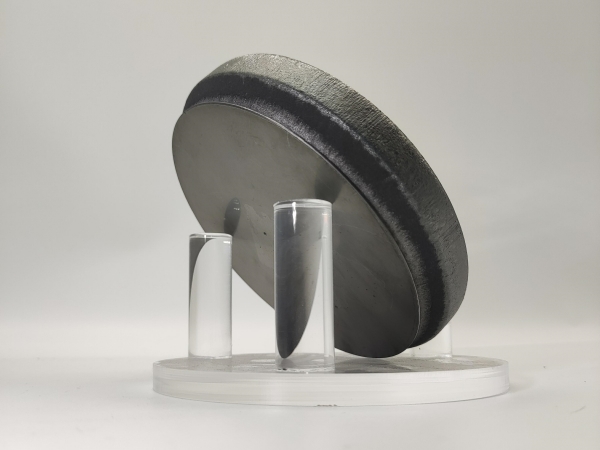
Featuring an ultra-broad spectral transmission window covering the full band from deep ultraviolet (DUV), visible light, and near-infrared (NIR) to mid-infrared (MIR), fused silica substrates are one of the most adaptable core substrate materials for optical spectroscopy, laser transmission, and optoelectronic detection applications. However, most practitioners hold a misconception that all fused silica substrates support full-band operation. In fact, three core factors—trace metallic impurities, irradiation-induced color center defects, and hydroxyl (OH) groups inside the substrate—directly alter the spectral transmission characteristics of the material and define strict application boundaries for ultraviolet and infrared bands. Improper material selection will lead to excessive transmission loss, signal interference, reduced equipment accuracy, and other adverse issues.
In ultraviolet band applications, metallic impurities and defect color centers are the dominant factors impairing transmission performance. Natural fused silica substrates smelted from traditional quartz sand contain trace metallic impurities including Li, Na, K, Al, Ti, and Fe, with impurity concentrations generally at the ppm level. These metallic impurities produce characteristic absorption peaks in the deep ultraviolet band, significantly reducing ultraviolet transmittance and shortening the UV transmission cutoff wavelength.

Figure 1: Comparative curve of the effects of various impurities and color centers on the ultraviolet transmittance of fused silica
Especially in the deep ultraviolet range below 200 nm, the absorption loss caused by impurities rises exponentially, making natural fused silica completely inapplicable for high-end scenarios such as excimer laser systems, deep ultraviolet spectral analysis, and ultraviolet lithography. Apart from native impurities, ultraviolet irradiation induces various defect color centers inside substrates, including Oxygen Deficiency Centers (ODC), E’ centers, and Non-Bridging Oxygen Hole Centers (NBOHC). These defects generate characteristic absorption at 248 nm, 215 nm, and 265 nm respectively, causing not only transmission loss but also ultraviolet fluorescence.
Such fluorescence acts as invisible optical interference, superimposing on target signals in spectral detection and weak signal measurement and resulting in distorted test data. High-sensitivity fluorescence spectroscopy, capable of detecting trace defects unidentifiable by conventional transmission testing and elemental analysis, has therefore become a core quality inspection method for UV-grade fused silica substrates.
To break through the performance limitations of natural quartz materials, flame hydrolysis synthetic fused silica substrates have been developed in the industry. Adopting silicon tetrachloride (SiCl₄) as the raw material, the substrates are fabricated via high-temperature decomposition in an oxyhydrogen flame, controlling internal metallic impurity content below 0.1 ppm—two orders of magnitude higher in purity than natural fused silica. They serve as exclusive high-end substrates for deep ultraviolet applications.
In infrared band scenarios, metallic impurities that dominate ultraviolet performance no longer play a decisive role. Instead, hydroxyl (OH) groups become the core indicator determining the infrared performance of fused silica substrates. Synthetic quartz substrates produced by traditional oxyhydrogen flame melting naturally contain a large number of OH groups. These groups exhibit an intense characteristic absorption peak at the 2.7 μm infrared band, causing severe infrared light loss and rendering the substrates unsuitable for infrared imaging, infrared spectral detection, optical fiber communication, and other infrared applications.
To meet infrared application requirements, the industry has continuously optimized production processes and developed low-OH and ultra-low-OH fused silica substrates. A series of advanced manufacturing technologies, including carbon monoxide flame replacement, soot deposition, high-temperature chemical drying, and vacuum vitrification, reduce the internal OH group content to below 1 ppm. This fundamentally eliminates infrared characteristic absorption loss and achieves ultra-high transmittance across the near-infrared to mid-infrared bands.

Figure 2: Infrared transmission spectra comparison of fused silica substrates with different OH group contents
In the quality inspection stage, Raman spectrometers and FTIR infrared spectrometers with sub-ppm resolution are adopted for accurate quantitative detection of OH content. Sufficient optical path length is guaranteed during testing to avoid data deviation and ensure the performance stability of infrared-grade substrates.
Furthermore, hydrogen loading modification technology has been developed to address the long-term irradiation aging issue of substrates in ultraviolet scenarios. By artificially increasing the concentration of free hydrogen molecules inside the substrate (exceeding 10¹⁷ molecules/cm³), the technology effectively passivates irradiation-induced color center defects and saturates optical absorption defects. It significantly improves the ultraviolet transmission stability and irradiation resistance lifespan of fused silica substrates, enabling long-term high-load operation in ultraviolet laser systems.

Featuring an ultra-broad spectral transmission window covering the full band from deep u...
In high‑end optical fields including precision lithography, laser interferometric metro...
IntroductionHigh-quality, low-defect SiC substrates serve as the foundation for manufact...